Case Study
MB-12 #00001
A battery-powered bruiser. Built to go toe-to-toe with the Soundboks – and then some.
The Brief
This one started as a simple question: "What if a portable speaker actually sounded like a good PA?"
Tyler approached us to see what we could do in boombox territory – loud, good quality, small form factor. After some back and forth, we let on that we had a bit of a monster in R&D: a 12" battery-powered box we assumed would be far too large for his use case.
He was sold immediately. His brother owned a Soundboks 3, so the brief became wonderfully simple: build something that could one-up it.
Most battery speakers are convenient but compromise heavily: harsh top end, boxy mids, flabby bass and a tendency to give up just when the party gets interesting. For the MB-12, we wanted to keep the fun of a Bluetooth speaker but swap the "portable gadget" DNA for "small PA system".
The Solution
We built a one-off 12" portable that borrows its DNA from our venue systems rather than lifestyle products.
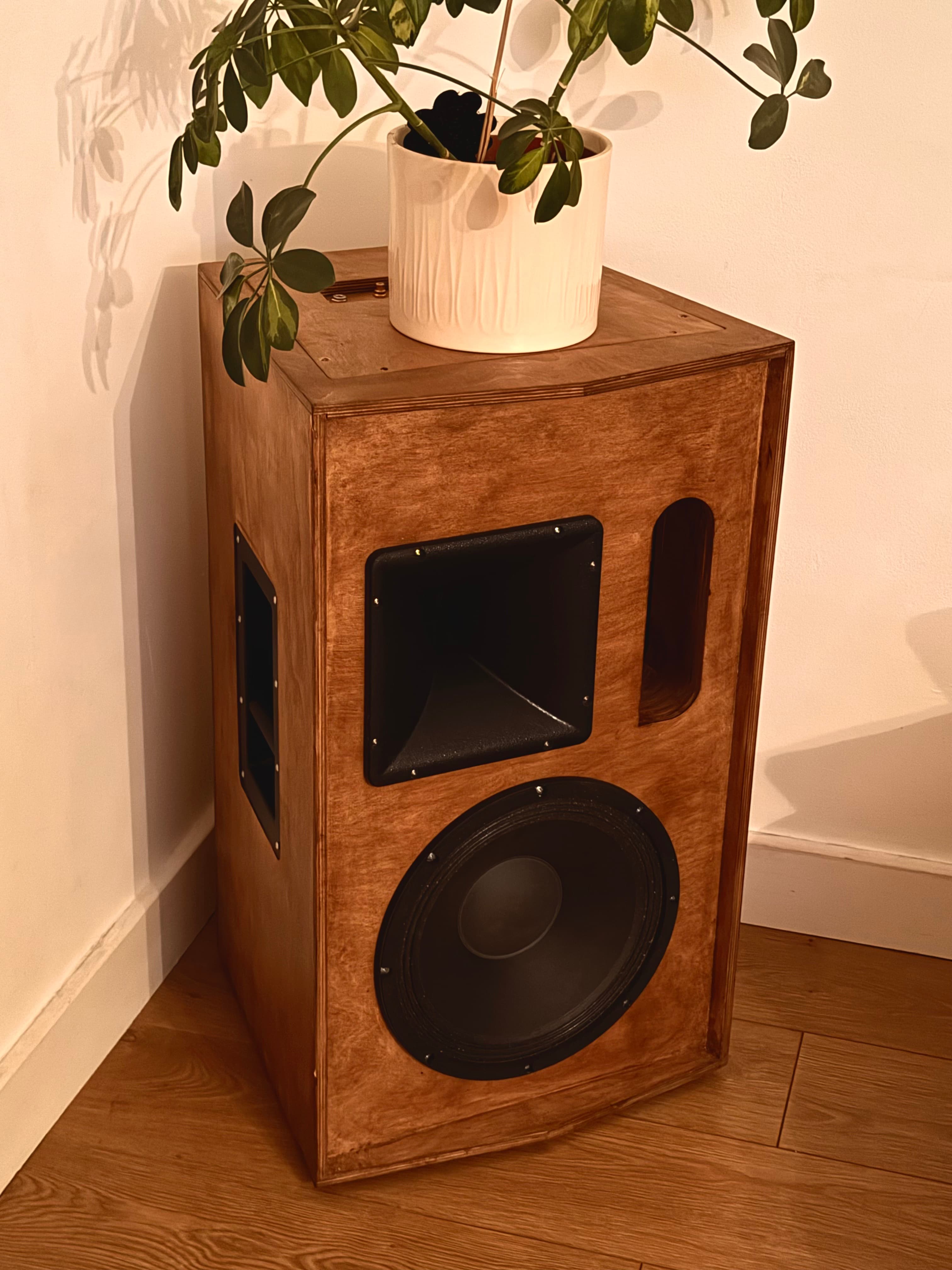
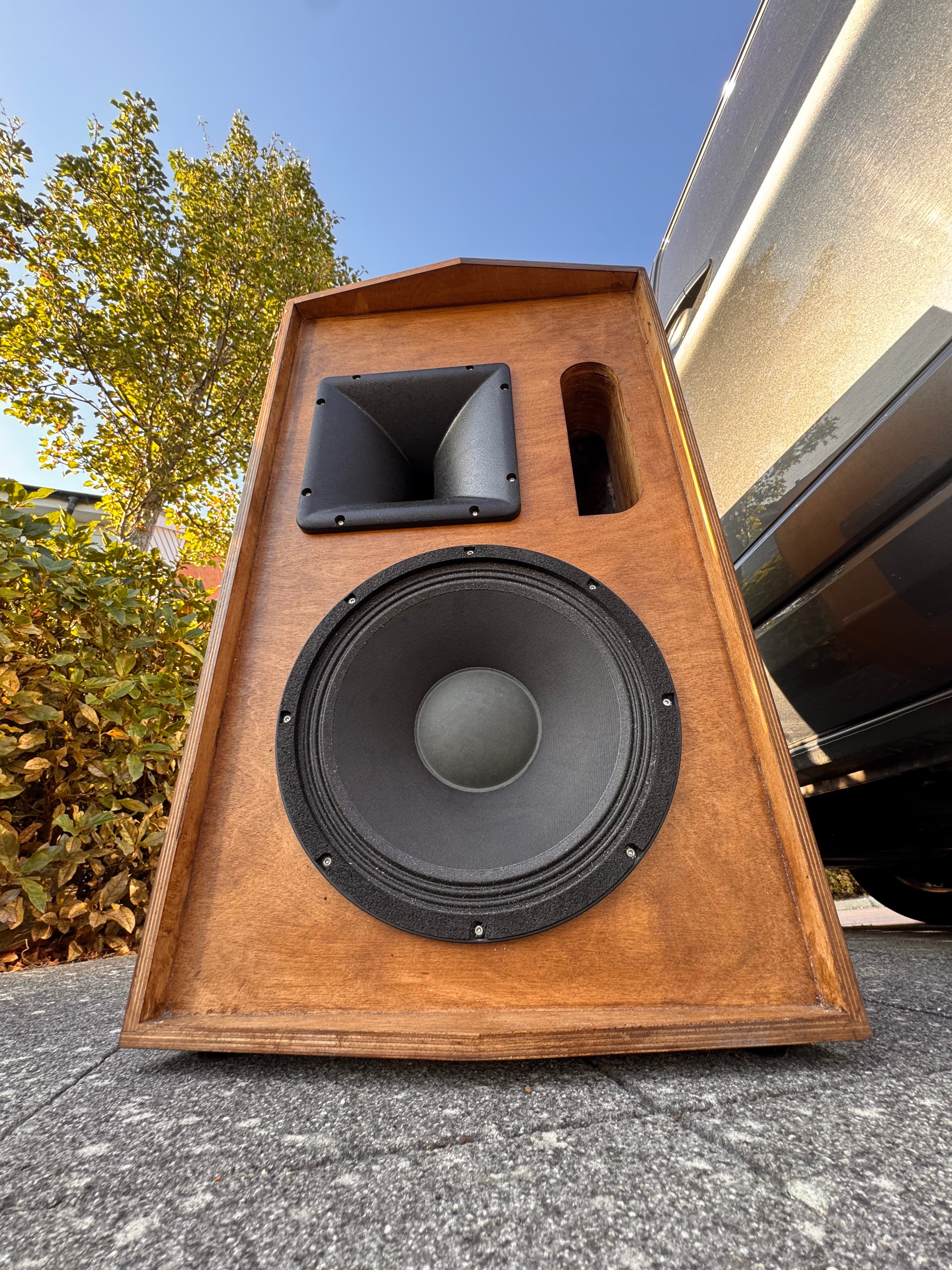
At the heart of the MB-12 is a B&C 12HPL76 – a serious PA woofer – paired with a B&C DE250 compression driver on an RCF H100 horn. Everything lives in a compact 15 mm birch ply enclosure with a full metal grill and a custom CNC 1-of-1 badge.
Under the hood:
300 W of total power
6S Li-ion battery pack
Active DSP with loudness compensation, so it stays balanced from "background" to "neighbours are texting"
The result is a speaker that behaves more like a shrunken club top than a big Bluetooth box.
Design & Construction
The MB-12 had to feel as serious as it sounds.
Enclosure – 15 mm birch ply, stained and oiled to bring out the grain rather than hide it under paint. Edges are left crisp and honest; you can see the ply, not plastic.
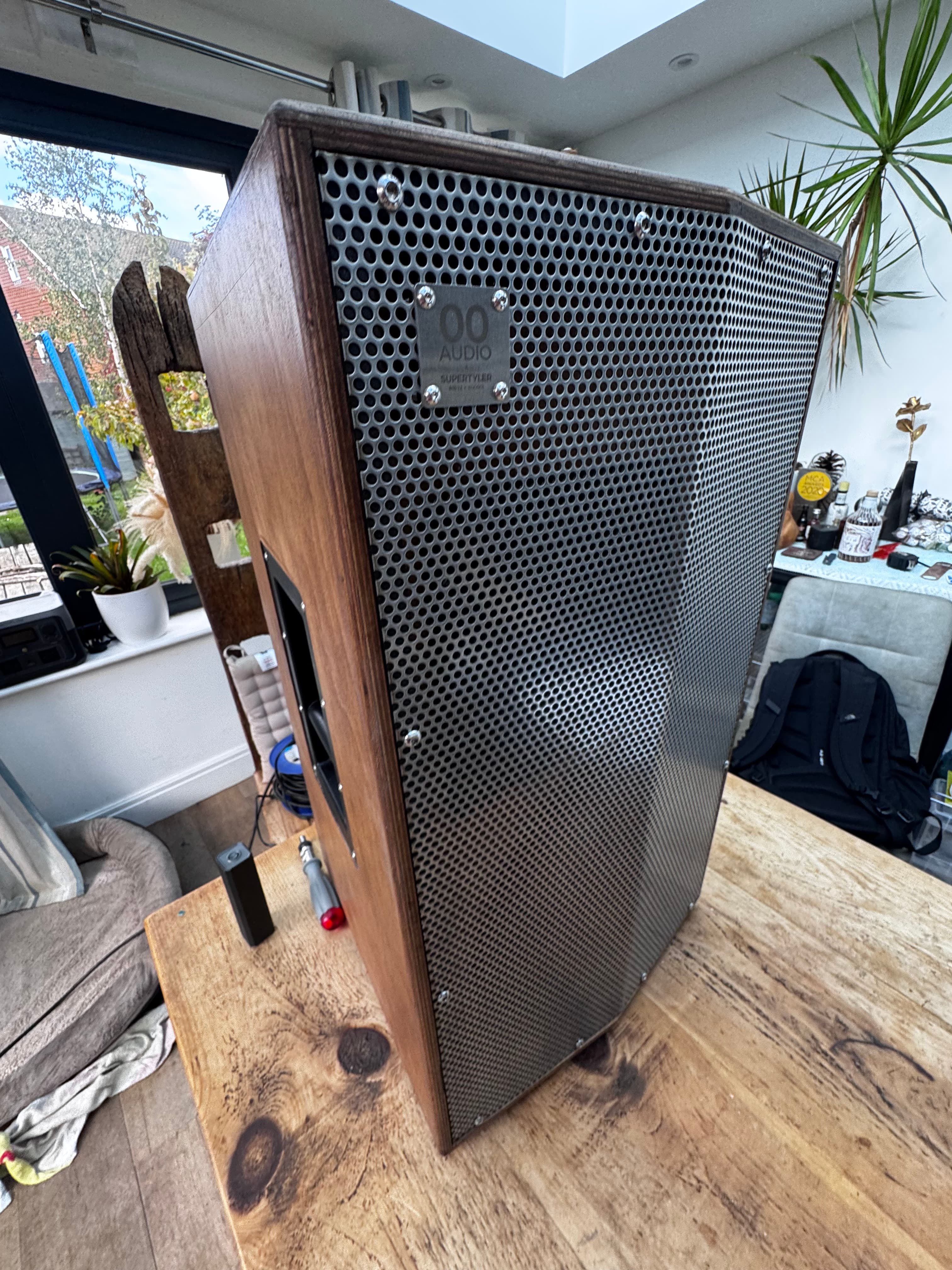
Front end – A perforated steel grill protects the drivers while keeping the visual simple: just metal, wood and the badge.
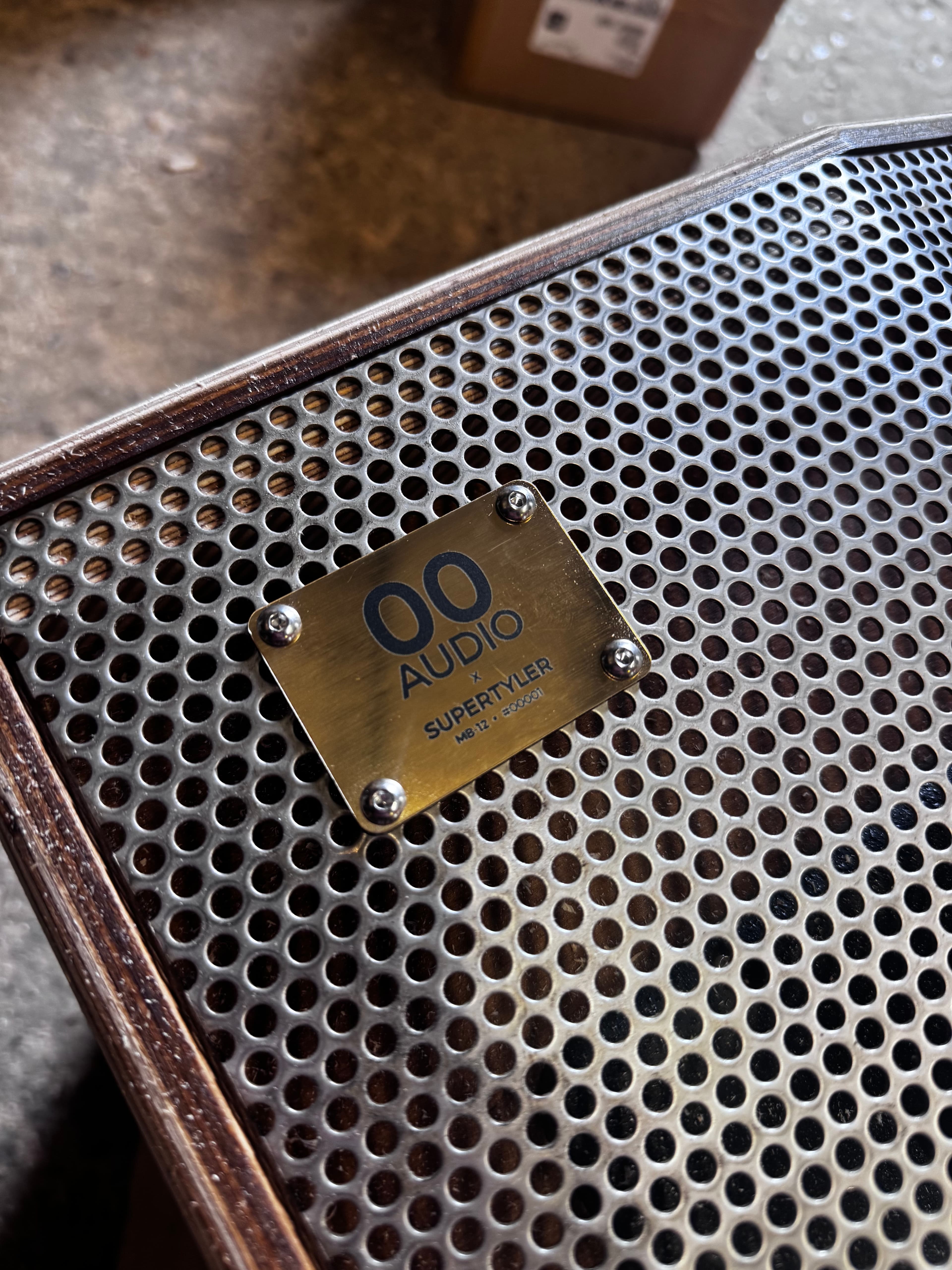
Badge – A CNC-cut 00 Audio × SUPERTYLER plate, laser-engraved and fixed with stainless hardware. It's a one-of-one build and it wears that openly.
Weight-wise, this is not a featherweight. It's firmly at the "two-hand carry" end of portable. But the extra mass buys a stiffer box, deeper bass and less of the rattly, strained quality you get when a lighter enclosure is pushed hard.
The Result
Making an effective Bluetooth speaker – especially as a product – is surprisingly hard. You're constantly juggling size, weight, low-frequency extension and supply-chain cost. Nudge one, you compromise another.
No shade to the Soundboks team: they've built a killer product, and as a small outfit we can't compete on manufacturing scale or logistics yet. Ultimately our offering is heavier and more expensive – but with a different set of priorities: a distinctive aesthetic, deeper extension and higher output for people who care more about sound and feel than carry-on weight.
In practice, the MB-12 is right at the edge of what you'd casually call "portable", but once it's down and switched on, it makes a very strong case for why that trade-off is worth it.
Comparisons
Navigating Bluetooth speaker specs can be a bit of a minefield. Wattage, peak dB figures, frequency response graphs – all designed to persuade you that this box is the best, while making it almost impossible to understand what it will actually sound like in the real world.
One commonly quoted figure is decibels as a measure of loudness. Soundboks quote 126 dB peak on their website. To be frank, that number on its own isn't very meaningful. We've measured >128 dB peak bursts from the MB-12 and nearly gone deaf in the process – but you wouldn't listen to music at that level for more than a few seconds.
A more honest, "this is where you'd actually run it" figure is around 113 dB continuous, with an F3 of 48 Hz.
The other big dimension is DSP. Pretty much all portable speakers (correctly) lean on signal processing to get a fuller, more balanced sound at lower volumes. The benefit to you is nicer tone at normal listening levels – but as you crank the volume, the processing has to start protecting the drivers, usually by rolling off bass.
Independent measurements of the Soundboks Gen 3 show that at max volume it begins limiting heavily below about 150 Hz. By 52 Hz it's roughly 20 dB down compared to midband. That's entirely understandable for a lightweight, mass-produced box – it's simply protecting itself.
We do the same thing – everyone does – but to a much lesser extent, and we're happy to spell out roughly what you can expect:
Estimated frequency response (typical use): ~30 Hz – 20 kHz (–10 dB). This is roughly what you'll hear 90% of the time.
Peak SPL: >128 dB (short burst, measured)
Max continuous SPL: ~113 dB
Max continuous bandwidth: 48 Hz – 20 kHz (±10 dB)
Full-range response at 50% volume (with DSP): ~30 Hz – 20 kHz (±10 dB)
All figures are from our own measurement setup and should be treated as informed, real-world approximations, not marketing absolutes.
The Numbers
For the spec-hungry.
System Specs
Enclosure
- Custom 00 Audio vented birch ply enclosure
- 15 mm Baltic birch, stained and oiled
- Full perforated steel grill
- CNC 1-of-1 00 Audio × SUPERTYLER badge
Drivers
- B&C 12HPL76 12" LF driver
- B&C DE250 HF compression driver
- RCF H100 horn
Amplification & DSP
- 300 W total amplifier power
- Active DSP crossover and limiting
- Loudness-style EQ compensation for low-level listening
Power & Connectivity
- 6S Li-ion battery pack
- Bluetooth audio input
- Additional I/O as required for wired sources
Ready for Your Project?
If you've got a space, a product idea or a slightly unhinged speaker concept, we can help you turn it into something real – from first sketch to first gig.